
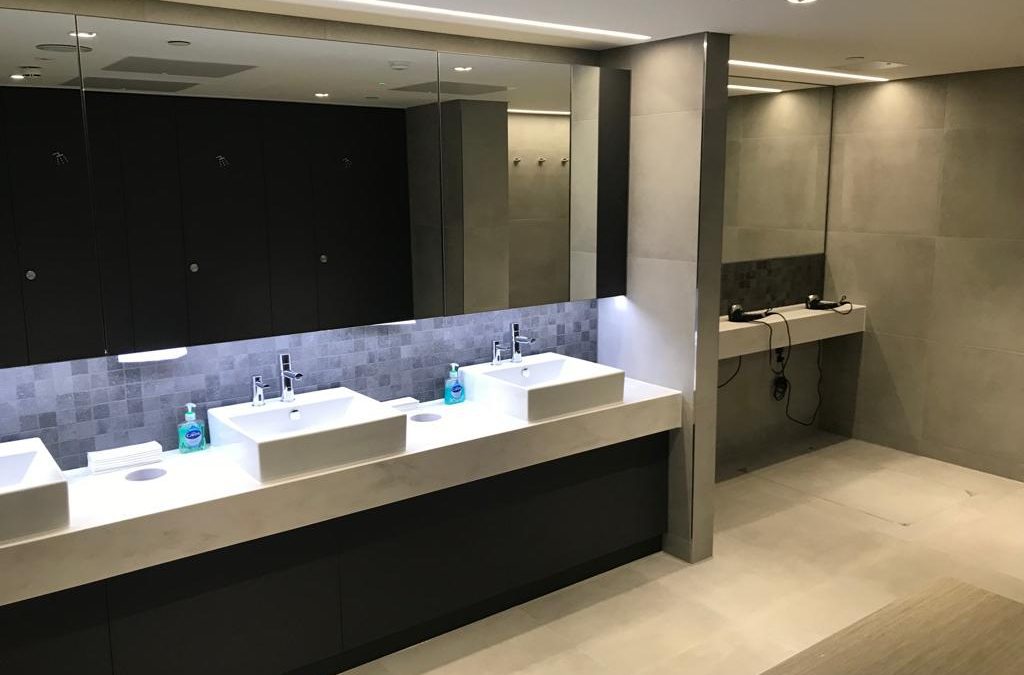
The Best Materials for Low-Maintenance Commercial Vanity Units
The washroom in any commercial facility—be it an office, a leisure centre, a hotel, or a school—reflects the quality and attention to detail of the entire organisation. At the heart of that washroom lies the vanity unit and worktop. In high-traffic environments, choosing the right material for these units is critical. It is not just about aesthetics; it is fundamentally about hygiene, durability, and most importantly, low maintenance. Materials that look good for six months but demand constant repair or harbour bacteria are simply not cost-effective in the long term.
This blog post delves into the best materials for low-maintenance commercial vanity units. We will analyse the properties that make certain materials superior, focusing on those that withstand heavy use, resist moisture, and allow for effortless cleaning, ensuring your washroom remains hygienic and presentable with minimal upkeep.
The Commercial Challenge: Why Maintenance is Key
Before assessing materials, it’s vital to understand the unique challenges commercial vanity units face compared to residential ones:
- Intense Usage Cycles: Commercial units are used dozens, sometimes hundreds, of times a day. They must withstand rapid temperature changes and constant exposure to soap, water, and cleaning chemicals.
- Hygiene Imperative: In public spaces, the risk of cross-contamination is high. Surfaces must be non-porous and easy to disinfect to meet strict health standards.
- Vandalism and Impact: Units, particularly in public buildings and educational settings, must be highly resistant to knocks, impacts, and deliberate damage.
- Minimised Downtime: If a vanity unit needs extensive repair, the washroom must be closed. This is disruptive and costly. Low-maintenance materials ensure maximum operational uptime.
Materials that fail to meet these demands will result in costly repairs, frequent replacement, and ongoing maintenance headaches.
Material Focus: The Top Contenders
Three materials consistently stand out for their performance in low-maintenance commercial washroom environments:
1. Solid Surface
Solid surface materials (such as Corian, Hanex, and LG HI-MACS) are an acrylic or polyester resin and mineral filler blend. They are widely regarded as the premium choice for seamless, hygienic, and low-maintenance commercial vanity units.
|
Advantage |
Benefit for Low Maintenance |
|
Non-Porous |
Completely prevents moisture ingress, staining, and bacteria/mould growth beneath the surface. |
|
Seamless Integration |
Vanity basins can be seamlessly moulded into the worktop. This eliminates the joint where water and dirt typically accumulate around a sink rim. |
|
Repairability |
Scratches, chips, or burns can often be easily sanded out by a professional, restoring the surface to its original condition without replacement. |
|
Durability |
High impact resistance makes them robust for high-traffic environments. |
Solid surface is an investment that pays for itself through minimal repair costs and superior hygiene performance. It is the ideal choice where hygiene and seamless aesthetics are paramount, such as in hotels and high-end offices.
2. Compact Grade Laminate (CGL) / Solid Grade Laminate (SGL)
Compact Grade Laminate is made from multiple layers of paper and resin compressed under extreme pressure, creating a solid, self-supporting panel. CGL is not just a surface layer; it is the material through and through.
|
Advantage |
Benefit for Low Maintenance |
|
100% Waterproof |
As a solid material, it is entirely impervious to water and steam. It will not swell or degrade, making it perfect for vanity unit panels. |
|
Extreme Durability |
Highly resistant to physical impact and abrasion. It is often the material of choice for anti-vandalism environments like schools and public transport hubs. |
|
Easy Clean Surface |
Like solid surface, the finish is smooth and non-porous, requiring simple wipe-downs for effective sanitation. |
|
Cost-Effective Durability |
Offers exceptional durability and moisture resistance at a more budget-friendly price point than solid surface. |
CGL is the workhorse of the commercial washroom. Its resistance to moisture and physical damage makes it a truly low-maintenance solution for the panelling elements of a vanity unit.
3. High-Pressure Laminate (HPL) on Moisture-Resistant Core
HPL is a versatile and common choice, consisting of a laminate surface bonded to a moisture-resistant MDF or chipboard core.
|
Advantage |
Benefit for Low Maintenance |
|
Cost Flexibility |
Offers the widest range of designs and is generally the most economical choice. |
|
Surface Resistance |
The top layer is very hard-wearing, offering good resistance to surface scratches and general wear. |
|
Design Versatility |
Available in an almost unlimited range of colours, patterns, and realistic wood grains. |
Critical Caveat: For HPL to be low-maintenance, the edge banding and core material selection are vital. Only using a moisture-resistant (MR) core and ensuring a perfectly sealed edge is acceptable. If moisture penetrates the edge joint, the core will swell, leading to costly and unsightly failure. This makes HPL more sensitive to installation quality but remains an excellent value option when used correctly.
Design Features for Long-Term Low Maintenance
The material is only half the battle. Bespoke design features can further reduce ongoing maintenance and improve hygiene:
1. Integrated vs. Under-Mounted Basins
- Integrated Basins (Best for Maintenance): Where the sink bowl is seamlessly joined to the worktop (as with solid surface). This eliminates the vulnerable joint between the sink rim and the worktop, which is a major area for grime and mould.
- Under-Mounted Basins (Good Alternative): The sink is fixed underneath the worktop, leaving a smooth surface above. This is superior to a drop-in sink, as it allows water and debris to be swept directly into the basin.
2. Wall-Mounted Taps and Soap Dispensers
Mounting taps and soap dispensers on the wall or on the IPS panelling behind the unit eliminates the difficult-to-clean area directly behind the sink where standing water often causes staining and scaling.
3. Seamless Splashbacks
Ensure the back edge of the vanity top has a seamless, upright splashback. This prevents water from running down the wall and behind the unit, which can cause structural damage and hygiene issues.
4. Custom Storage Solutions
Custom cabinetry beneath the vanity unit, made from CGL or HPL on MR cores, provides necessary storage. By designing the units to be slightly raised off the floor, or fully suspended, cleaning staff can easily clean the entire floor area beneath the vanity, eliminating dust and dirt traps.
BRAC Projects: Engineered for Low Maintenance
At BRAC Projects, we understand that a low-maintenance commercial vanity unit is an essential investment. Our fabrication expertise focuses on ensuring that the materials and design choices deliver maximum longevity and minimal fuss.
We specialise in:
- Solid Surface Worktops: We expertly fabricate solid surface vanity tops, offering seamless integrated basins and zero-joint splashbacks for ultimate hygiene.
- CGL and HPL Fabrication: We manufacture all panelling and cabinetry using appropriate moisture-resistant cores and precision sealing techniques, ensuring the units withstand constant exposure to water.
- Bespoke Design: We tailor the vanity unit’s dimensions to fit the space perfectly, accommodating integrated waste chutes and DDA-compliant features, simplifying both function and cleaning.
By choosing high-quality, bespoke materials from BRAC Projects, you future-proof your washrooms, guaranteeing that they remain hygienic, attractive, and functional with minimal ongoing cost and effort.