
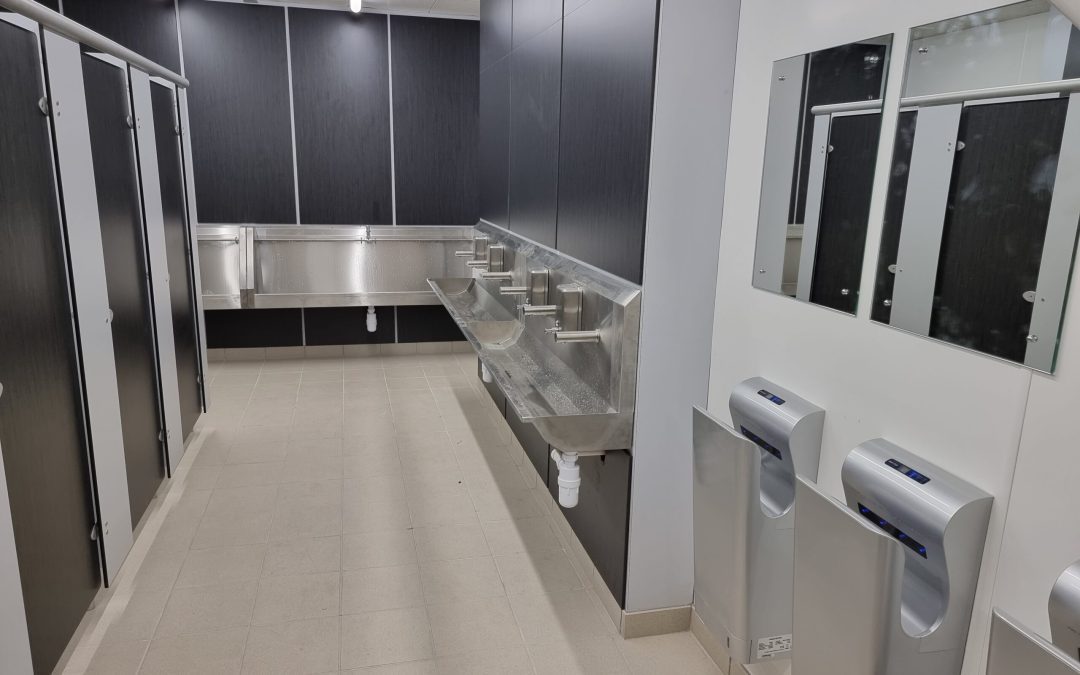
Washroom Panelling: Essential for Concealing Plumbing and Services
The modern commercial washroom is a high-traffic area that requires durability, impeccable hygiene, and a professional aesthetic. While many elements contribute to a successful washroom, the system used to manage pipework and services—known as washroom panelling or IPS (Integrated Plumbing System)—is arguably the most critical and often overlooked component. This system moves beyond simple decoration; it is essential for the function, maintenance, and longevity of the entire facility.
This blog post delves into why washroom panelling is non-negotiable for concealing plumbing and services. We will explore the functional necessities, the hidden costs of exposed pipework, and how expertly fabricated panelling provides a robust, hygienic, and accessible solution for architects, contractors, and facility managers across the UK.
The Problem with Exposed Services
In older buildings or poorly executed refurbishments, plumbing and pipework are sometimes left exposed behind sanitaryware. While seemingly straightforward, this approach creates numerous long-term liabilities:
- Severe Hygiene Risks: Exposed pipework, brackets, and fittings create multiple horizontal surfaces and joints. These become traps for dust, dirt, moisture, and bacteria. Even with daily cleaning, these hidden areas are difficult to sanitise properly, compromising the overall hygiene of the washroom. In settings such as hospitals, schools, or food processing plants, this risk is unacceptable.
- Aesthetic Failure: Taps, cisterns, and wastes are functional necessities, but exposed pipe runs, service valves, and water meters are not intended to be design features. They contribute to a cluttered, institutional, and unprofessional appearance. A clean, seamless design is impossible to achieve with visible plumbing.
- Vandalism and Damage: Exposed pipework and vulnerable fittings are easy targets for accidental damage or deliberate vandalism. A simple kick can damage a service pipe or valve. Repairs become frequent, disruptive, and costly.
- Maintenance and Access Issues: When services are fixed directly to a wall, accessing them for maintenance or repair often requires disruptive and messy work. This typically involves hacking into tiled walls, leading to expensive re-tiling and extended washroom downtime. This is inefficient and costly for facility management.
The solution to these fundamental issues is the adoption of a fully engineered panelling system.
Introducing Integrated Plumbing Systems (IPS)
An Integrated Plumbing System (IPS) is a prefabricated panelling unit specifically designed to solve the issues associated with exposed plumbing. It acts as a structural framework that conceals the cisterns, pipework, and supply valves of WCs, urinals, and washbasins.
The system typically consists of three main components:
- The Frame: A rigid framework (often metal or moisture-resistant timber) secured to the washroom wall or floor. This framework supports the sanitaryware (like the WC pan) and the panelling itself.
- The Plumbing Services: All cisterns, pipework, and fixings are mounted onto this frame behind the panels.
- The Duct Panels: These are the visible, finished panels, usually made from high-grade laminate, which are securely but removably fixed to the frame.
This method fundamentally changes how the washroom operates, prioritising both cleanliness and accessibility.
The Functional Necessity: Concealment and Access
The primary value of IPS and duct panelling lies in its dual function: concealing pipework while providing immediate access.
1. Engineered Concealment
The panelling covers the entire service void, hiding all pipework, wiring, and cisterns from view. This achieves the desired clean, minimalist aesthetic demanded by modern commercial design. Furthermore, by protecting the vital services, it significantly reduces the likelihood of accidental damage or vandalism, providing long-term structural security.
2. Effortless Maintenance Access
This is perhaps the most significant functional benefit for facility managers. Because the IPS panels are designed to be demountable, maintenance access is immediate and non-destructive.
- A panel (typically the one behind the cistern or beneath the basin) can be quickly unclipped or unscrewed.
- The plumber can then access the hidden cistern, isolation valves, or service joints without damaging the walls or tiling.
- Once the repair or maintenance check is complete, the panel is simply refitted.
This capability drastically reduces the time and cost associated with repairs. Instead of a multi-day repair job requiring a plumber, a tiler, and disruptive noise, a maintenance issue can often be resolved within a single hour. This minimal downtime is vital for busy facilities like offices, leisure centres, and hospitals.
3. Superior Hygiene
By creating a smooth, flat wall surface, IPS panelling eliminates the complex contours, crevices, and dust traps associated with exposed plumbing. Panels are typically manufactured from materials that are easy to wipe down and disinfect (such as Solid Grade Laminate). This is paramount for preventing cross-contamination and maintaining a hygienic washroom environment that meets modern clinical and public health standards.
Material Choices: Durability Under Pressure
For panelling to function effectively and withstand the rigours of a busy washroom, the material selection is crucial. The material must be completely resistant to moisture, high impact, and harsh cleaning chemicals.
- Solid Grade Laminate (SGL) / Compact Grade Laminate (CGL): This is the industry-leading choice for duct panelling. SGL is entirely impervious to water, meaning it will not swell, warp, or delaminate, even in constantly wet conditions. It is also exceptionally dense and highly resistant to impact and vandalism, making it ideal for schools and public buildings.
- High-Pressure Laminate (HPL): Used for less critical areas or where budgets are tighter. HPL panels are highly durable and offer excellent resistance to surface scratches and wear. They must be manufactured using moisture-resistant cores and ensure all edges are impeccably sealed to prevent moisture ingress.
- Solid Surface: Used for premium or clinical environments. Solid surface offers seamless joints and is completely non-porous. This is excellent for achieving the highest levels of hygiene, as the panels can be seamlessly jointed to vanity units or wall cladding, eliminating all crevices.
The panelling is not merely a cover; it is a structural barrier against moisture and damage. Choosing the correct, robust material ensures the system performs reliably for decades.
Beyond Function: Aesthetics and DDA Compliance
While the functional reasons for using IPS panelling are compelling, the system also delivers significant aesthetic and compliance benefits:
- Design Freedom: Panelling is available in hundreds of colours, wood grains, and bespoke digital prints. This allows designers to perfectly match the washroom aesthetic to the overall design scheme and branding of the building.
- Creating a Cohesive Look: IPS units pair perfectly with other washroom components, such as bespoke vanity units and toilet cubicles, creating a unified and professional appearance.
- DDA Compliance: The IPS system is often designed to integrate accessibility features. The secure structural frame can support grab rails, vertical support arms, and specialist sanitaryware required to meet Disability Discrimination Act (DDA) compliance standards, ensuring the washroom is accessible to all users.
The BRAC Projects Difference
At BRAC Projects, we specialise in the bespoke design, fabrication, and installation of IPS and duct panelling systems. We understand that every washroom project has unique dimensions and service requirements.
We leverage our in-house manufacturing capabilities to provide solutions that are:
- Precision Engineered: All panels are cut to measure, ensuring a perfect, site-specific fit that meets all tolerances and standards.
- Material Focused: We guide clients to the most appropriate material—whether SGL for maximum durability or HPL for balance—to ensure the panelling system performs over its entire lifespan.
- Fully Integrated: Our IPS systems are designed to integrate seamlessly with our bespoke toilet cubicles, vanity units, and worktops, ensuring a cohesive and high-quality final installation.
By choosing BRAC Projects, you invest in a washroom infrastructure that is easy to maintain, hygienic, resilient to damage, and impeccably finished, eliminating the hidden costs associated with exposed plumbing.