

School furniture is used by hundreds of pupils every week, for years. Buying the wrong size, the wrong materials or furniture that does not suit how the school teaches costs more in the long run than buying well the first time.
This buying guide explains what to specify for primary and secondary schools, from sizing and materials to storage, accessibility and the questions to ask a supplier. It is written for school business managers, heads, trusts and facilities teams.
Table of Contents
What should you look for when buying school furniture?
When buying school furniture, look for the right size for the pupils, hard-wearing and easy-clean materials, safe and stable construction, and a design that suits how each room is taught. Check that chairs and tables are sized to BS EN 1729 and that the supplier can support you after installation.
- Correct sizing for the age and height of pupils
- Durable, easy-clean surfaces and strong edges
- Stable, safe construction with no sharp corners
- Storage that keeps rooms tidy and resources within reach
- Accessible positions for pupils who need them
- A supplier who can design, install and support the furniture
What is BS EN 1729 and why does it matter?
BS EN 1729 is the European standard for chairs and tables in educational institutions, adopted in the UK. Part 1 sets functional dimensions and Part 2 sets safety requirements and tests. It replaced the older British standard BS 5873 and sizes furniture by pupils’ height, not just their age.
The standard uses size marks, so that chairs and tables of the same size mark work together. Because children of the same age vary in height, the right size mark is based on pupils’ stature rather than their year group. Many schools buy a mix of sizes for each class.
What school furniture does a primary school need?
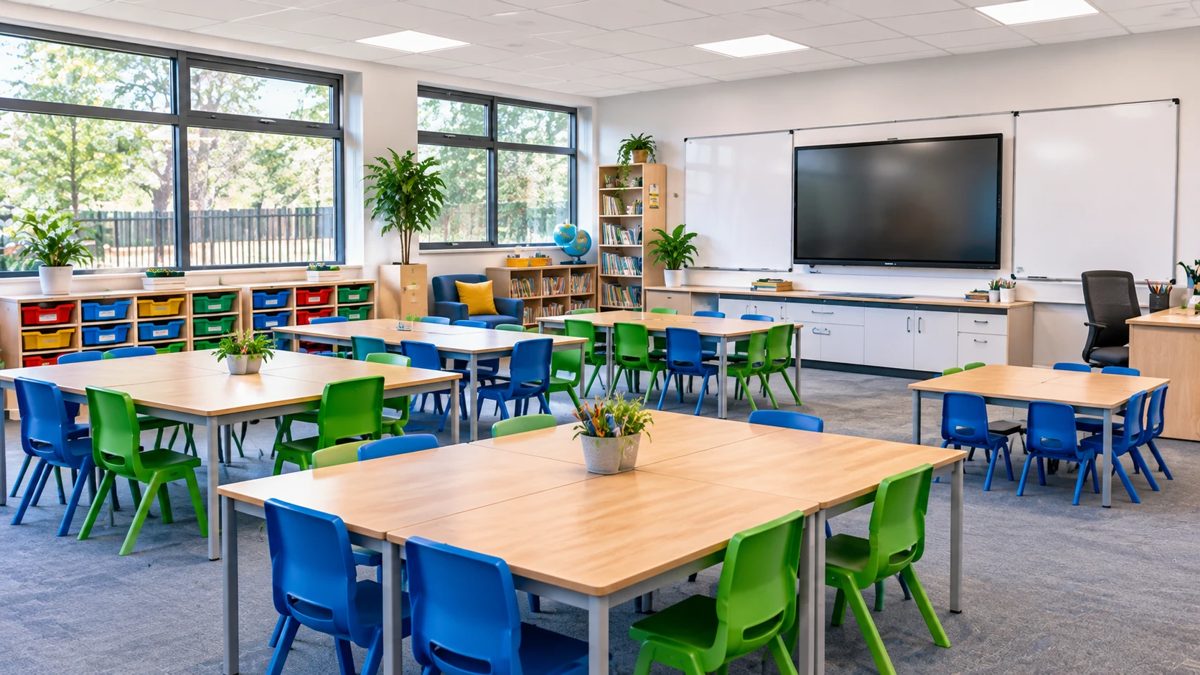
A primary school needs smaller chairs and tables in several sizes, low storage that pupils can reach, flexible tables for group work, and furniture that is easy to move and clean. Reading corners, cloakrooms and early years areas also need furniture sized and designed for younger children.
- Classroom tables and chairs in more than one size mark
- Low-level trays, shelving and storage pupils can reach
- Flexible tables that can be grouped for different activities
- Reading areas and library shelving at child height
- Cloakroom furniture and lockers or pegs
What school furniture does a secondary school need?
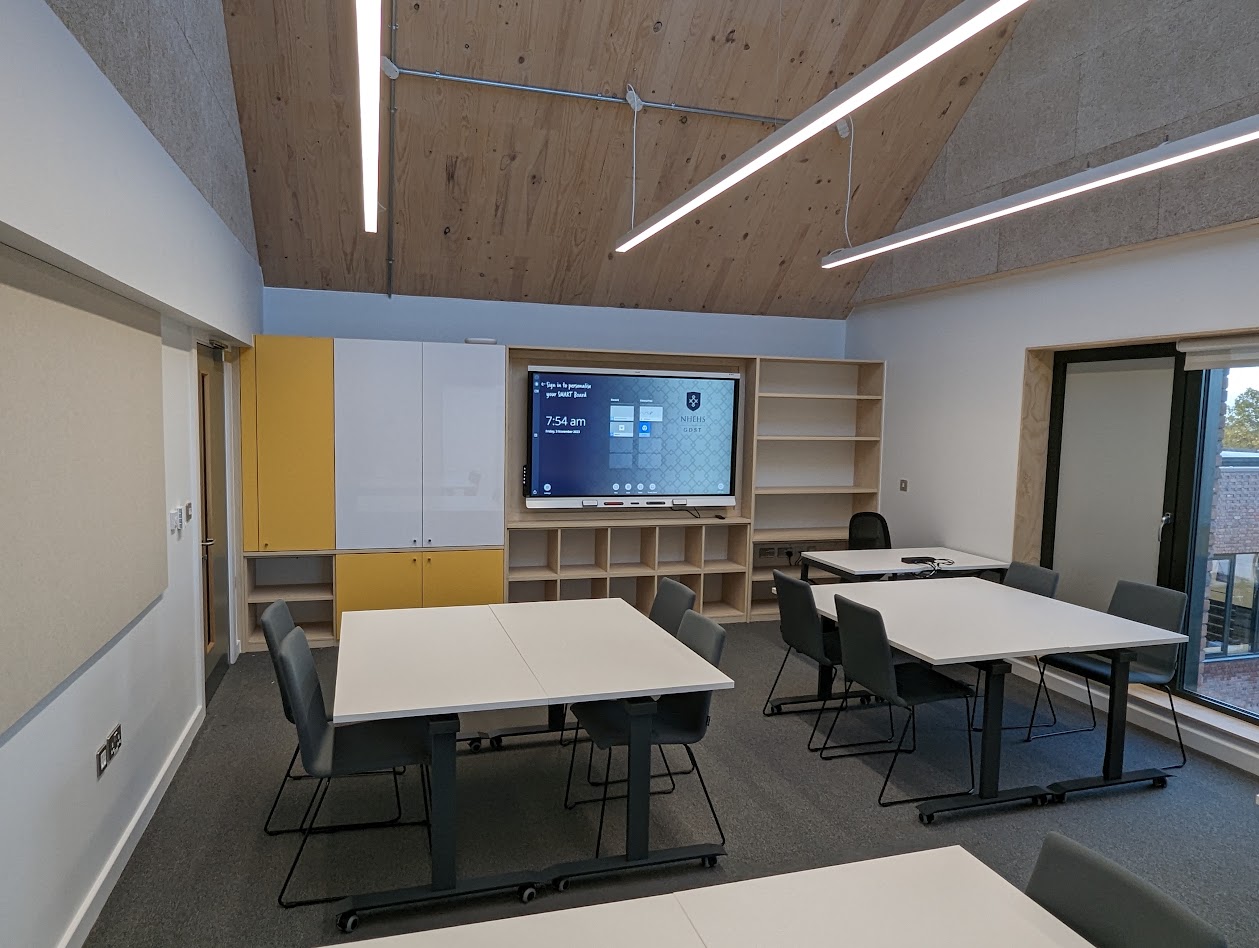
A secondary school needs larger, sturdier furniture for older pupils, plus specialist furniture for science labs, technology and food rooms, libraries and sixth form areas. Each subject room has different needs, so secondary schools usually buy furniture room by room rather than as one standard set.
- Classroom desks and chairs for older pupils
- Science laboratory furniture with services and chemical-resistant worktops
- Food technology and design and technology furniture
- Teaching walls that combine the board, display and storage
- Sixth form study areas, common rooms and breakout seating
Which materials are best for school furniture?
The best materials for school furniture are hard-wearing, easy to clean and safe. High-pressure laminate is common for desks and tables, compact laminate (solid grade laminate) suits areas that get wet or take heavy wear, and solid surface suits worktops that need to be seamless and hygienic.
| Material | Strengths | Typical use |
|---|---|---|
| High-pressure laminate | Durable, wide colour choice, cost-effective | Desks, tables, storage |
| Compact laminate (SGL) | Solid throughout, waterproof, impact-resistant | Washrooms, wet areas, heavy-use surfaces |
| Solid surface | Seamless, repairable, hygienic | Worktops, food rooms, labs |
| Steel frames | Strong and stable | Chairs and table frames |
Should schools buy bespoke or off-the-shelf furniture?
Off-the-shelf furniture suits standard classrooms where sizes and layouts are simple. Bespoke furniture suits rooms with awkward shapes, specialist uses or built-in features such as teaching walls, labs and libraries. Many schools use both: standard chairs and tables, with bespoke fitted furniture where the room needs it.
Read more in our guides to bespoke furniture or flat pack and classroom renovations.
How do you make school furniture accessible?
Make school furniture accessible by including height-adjustable or lower positions, leaving enough space for wheelchair users to move and turn, and placing storage and controls within reach. Schools have duties under the Equality Act 2010, so plan accessible positions in every room rather than in one place.
How should a school plan a furniture purchase?
Plan a school furniture purchase by surveying the rooms, agreeing what each room needs with the staff who use it, setting a budget, and timing delivery and installation for the holidays. Ask suppliers about sizing, materials, lead times, installation and after-sales support before you decide.
1. Survey the rooms
Record room sizes, pupil numbers and how each room is used.
2. Agree needs with staff
Teachers and support staff know what works in their rooms and what does not.
3. Set priorities and budget
Decide which rooms need replacing first, and whether a phased plan over several years makes sense.
4. Plan delivery around the school year
Order early so furniture can be delivered and installed during the holidays.
Frequently asked questions
What size school chair does my child need?
School chairs and tables are sized by size marks under BS EN 1729, based on the pupil’s height rather than their age. Because children in the same year group vary in height, schools often provide more than one size in each classroom.
Does school furniture have to meet BS EN 1729?
BS EN 1729 is the recognised standard for chairs and tables in educational settings in the UK, covering sizes and safety. Schools should ask suppliers to confirm that the chairs and tables they buy are designed and tested to it.
What is the most durable material for school desks?
High-pressure laminate is a common and durable choice for school desks because it resists scratches and is easy to clean. For heavy-use or wet areas, compact laminate is tougher still because it is solid throughout and waterproof.
When is the best time to buy school furniture?
Order well before the holidays, especially the summer holiday, so furniture can be delivered and installed without disrupting lessons. Bespoke furniture takes longer to manufacture than standard furniture, so it needs to be ordered earlier.
Should primary and secondary schools buy different furniture?
Yes. Primary schools need smaller furniture in several sizes, low storage and flexible layouts, while secondary schools need larger furniture and specialist furniture for labs, technology rooms, libraries and sixth form areas.
Do you make bespoke school furniture?
Yes. BRAC Projects designs and manufactures bespoke educational furniture at our workshop in Polegate, East Sussex, including teaching walls, science lab furniture, library furniture and food technology furniture, and installs it in schools across the UK.
Buying the right school furniture
Good school furniture is sized to the pupils, built from hard-wearing materials, accessible, and designed around how each room is taught. Planning room by room and ordering in time for the holidays helps schools buy furniture that lasts.
See our educational furniture service and our education sector work.
Planning new school furniture? Tell us about your rooms and we will advise on furniture, materials and installation. Contact us for a free, no-obligation quote.