

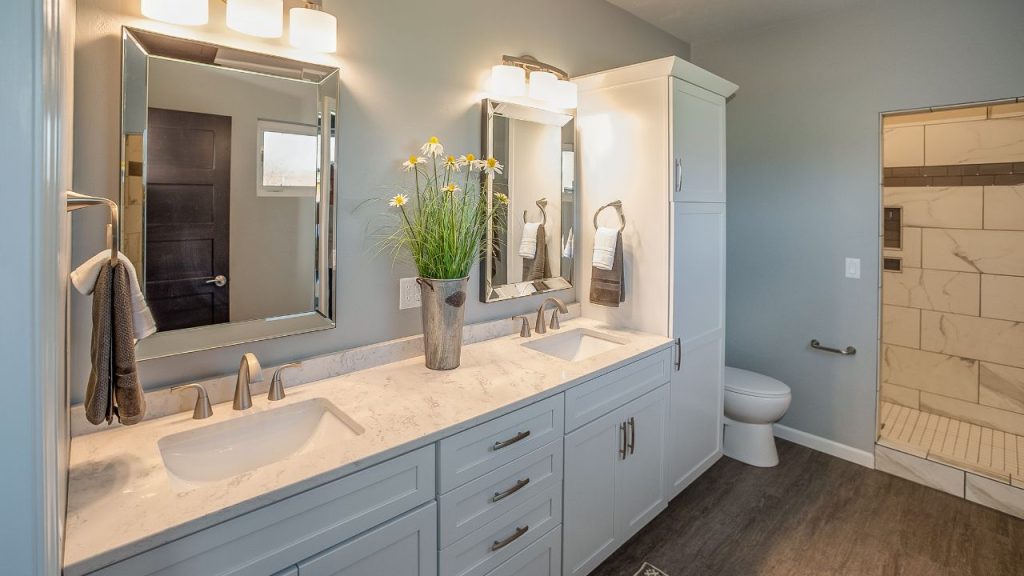
The modern commercial washroom is now viewed as an extension of a brand’s identity and a critical component of the overall guest or employee experience. High-end hotel operators, office fit-out specialists, and interior designers are looking to create premium, multi-sensory environments that feel like luxury spas.
At the centre of this washroom transformation is the vanity unit. No longer a simple counter with a drop-in basin, the modern vanity has evolved into an intelligent, highly engineered workstation. The prevailing design methodology focuses on the “all-in-one” vanity system—a single, cohesive station where a user can wash, rinse, and dry their hands without ever taking a step away from the sink. By merging advanced material fabrication with smart technology and architectural lighting, these systems are redefining the aesthetics and operational efficiency of commercial washrooms.
Keeping Water Off the Floor by Design
For facilities managers and hotel operators, wet washroom floors are a constant source of anxiety. In a traditional washroom layout, the user washes their hands at the vanity unit and then walks across the room to a wall-mounted hand dryer or paper towel dispenser. This short journey is where the system breaks down.
As water drips from the user’s hands, it creates a trail of puddles across the floor. This leads to several immediate operational issues:
- Slip and Fall Hazards: Wet tiles or vinyl floors are incredibly hazardous, exposing building owners to costly liability claims and health and safety violations.
- Accelerated Grout and Floor Degradation: Standing water seeps into grout lines and beneath floor finishes, causing structural dampness, foul odours, and the growth of black mould.
- Constant Maintenance Demands: Cleaning teams must constantly monitor the space to mop up water tracks, driving up labour costs and disrupting the guest experience.
The all-in-one vanity unit solves this problem by containment. By moving the hand-drying technology directly to the basin area, the user’s hands never leave the footprint of the vanity during the entire hygiene cycle. Water is captured exactly where it falls, draining away instantly. This simple layout adjustment improves user safety and reduces the daily cleaning and maintenance burden on facility staff.
Technical Precision: CNC-Machining the Smart Vanity
Integrating multiple electronic components into a single vanity unit requires a level of precision that traditional on-site joinery cannot achieve. To create a seamless finish where technology feels built-in rather than bolted on, advanced manufacturing techniques are mandatory.
| Mirrored Cabinet / Sensor Dryer |
| Seamless Solid Surface Trough (Corian/Hanex) |
| Concealed CNC-Machined Internal Support Framework |
Using precision CNC (Computer Numerical Control) machining in a controlled factory environment allows for the exact routing, cutting, and drilling of advanced materials to house smart fixtures.
1. Integrated Over-Sink Dryer Systems
Modern washrooms increasingly utilise deck-mounted or wall-mounted sensor taps that feature integrated air blades. These fixtures deliver water, soap, and high-speed air from a single architectural stem over the basin. CNC machining allows the fabricator to cut exact apertures into the solid surface countertop to mount these heavy, high-pressure fixtures. This prevents any flexing or movement over time, ensuring a rock-solid installation that can handle hundreds of cycles a day.
2. Behind-Mirror Dispensers and Services
For facilities that prefer paper towels or require a completely clear countertop, the space behind the vanity mirror is utilised. CNC-machined vanity frameworks can be built with precise, recessed voids hidden behind touch-induction mirrored cabinets. These voids house high-capacity paper towel dispensers and automatic soap reservoirs. The towels feed out from a flush opening directly beneath the mirror, keeping the countertop completely free of clutter and maintaining a minimalist aesthetic.
Creating the Multi-Sensory Experience with Integrated Lighting
Human beings experience architectural spaces through a combination of senses. While material choice addresses the sense of touch, lighting dictates visual comfort and emotional response. Harsh, direct fluorescent lighting can make a washroom feel cold and clinical. The modern trend favours a hospitality-driven approach, using layered, indirect illumination to create a warm, calming atmosphere.
Bespoke vanity units can be fabricated to incorporate lighting as a core structural element, rather than a secondary electrical fixture:
- Recessed LED Halo Lighting: By routing precise channels into the underside of the vanity fascia or behind the perimeter of the mirrored storage units, fabricators can install low-voltage LED strips. This creates a “halo” effect, casting a soft, indirect glow that masks harsh shadows and makes the vanity appear to float weightlessly within the room.
- Illuminated User Zones: Subtle LED lighting can be integrated into the basin troughs or beneath the tap stations to instinctively guide the user through the wash-rinse-dry process. This is particularly useful in low-lit environments, such as luxury bars, boutique hotels, or premium nightvenues, where clear wayfinding is essential.
- Warmth and Color Rendering: Moving away from cool white light (5000K+) toward warmer colour temperatures (2700K to 3000K) soft-focuses the space, rendering skin tones naturally and making the environment feel premium, welcoming, and safe.
Material Superiority: Seamless Solid Surfaces
An all-in-one vanity unit handles an exceptional amount of moisture and airflow. Standard laminated wood products simply cannot survive this environment without warping, delaminating, or trapping bacteria. To achieve true commercial longevity, materials like Solid Surface (such as Corian or Hanex) are the premier choice.
Solid Surface is a non-porous composite material that can be seamlessly joined and thermoformed into complex curves. When creating a smart vanity system, this provides major structural benefits:
Custom Trough Incline Angles
When high-speed hand dryers operate directly over a sink, the force of the air can blow water out of the basin if the angles are incorrect. Bespoke fabrication allows for the creation of continuous trough sinks with precisely engineered slopes. The fall of the basin is calculated to catch the water and direct it smoothly toward the drainage channel, preventing splashing or standing water.
Eradication of Silicone and Grout Joints
Traditional basins are sealed to countertops with silicone, which quickly degrades, turns black with mould, and catches dirt. Solid Surface basins are chemically fused to the vanity top. This results in a completely seamless, monolithic structure with zero gaps, zero grout lines, and zero silicone beads. The vanity becomes entirely hygienic and exceptionally easy to wipe clean, resisting the build-up of soap scum and calcium.
The Turnkey Fabrication Advantage
Coordinating the install of an all-in-one vanity unit involves aligning multiple trades—including plumbers, electricians, joiners, and smart-tech suppliers. If a single measurement is miscalculated on a standard site fit-out, the electronic sensors may misalign with the basin centers, or cable routes may block essential plumbing access.
Choosing a turnkey fabrication partner simplifies this process. By handling the complete lifecycle—from initial 3D CAD modeling and precise factory CNC machining to the final installation—every element is tested for compatibility prior to arriving on-site. The internal cabinetry is pre-fitted with dedicated cable management trays, plumbing service access hatches, and secure mounting brackets. This ensures that when the vanity arrives on-site, it can be fitted rapidly, minimizing construction downtime and ensuring absolute operational reliability.
Conclusion
The commercial washroom is no longer a hidden utility space; it is a vital part of modern hospitality and workplace architecture. By embracing the all-in-one vanity trend, interior designers and office fit-out specialists can eliminate wet floors, reduce daily maintenance costs, and provide a premium user experience.
Engineering a multi-sensory washroom requires a deep understanding of material capabilities and technological integration. Combining robust internal sub-frames with seamless solid surfaces and integrated LED lighting results in a vanity system that is built to perform and designed to impress.
If you are planning your next premium commercial development, contact BRAC Projects. Our specialist manufacturing and installation teams can help you bring precision fabrication and smart design to your next washroom project.