

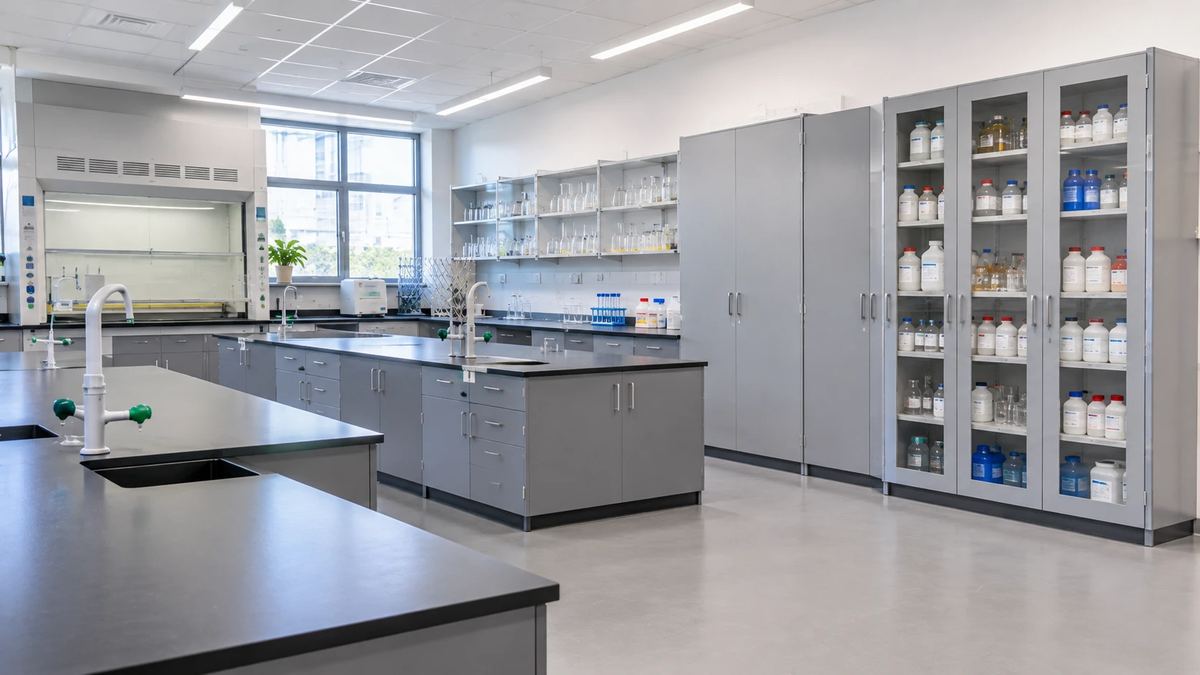
Laboratory storage is the cupboards, drawers, shelving and specialist cabinets that keep a lab’s equipment, consumables and chemicals organised and safe. Most labs run out of storage before they run out of bench space, and when items have nowhere proper to go they end up on worktops and in walkways, which slows work down and adds risk.
This guide explains the main types of laboratory storage, the UK rules that apply to chemical and flammable storage, and how to plan storage for a school, college, university or research lab. It draws on BRAC Projects’ experience designing and manufacturing laboratory furniture, including a 16-laboratory fit-out for Science Creates in Bristol.
Table of Contents
What is laboratory storage?
Laboratory storage is the cupboards, drawers, shelving and specialist cabinets used to keep equipment, consumables, samples and chemicals organised and safe in a lab. Good lab storage keeps worktops clear, separates items that should not be stored together, and puts everyday equipment within reach of the people who use it.
In most labs, storage is built into the lab benching as under-bench cupboards and drawers, with tall cupboards and wall shelving around the room and specialist cabinets where the work needs them. Planning storage at the same time as the benching avoids the common problem of adding free-standing units later that block walkways.
What types of laboratory storage are there?
The main types of laboratory storage are under-bench cupboards and drawers, tall storage cupboards, open and wall shelving, mobile storage units, glassware and drying racks, and specialist cabinets for chemicals and flammable materials. Most labs need a mix of these, planned around the work done in each area of the room.
| Storage type | Best for | Where it goes |
|---|---|---|
| Under-bench cupboards and drawers | Everyday equipment and consumables | Under serviced benching |
| Tall cupboards | Bulk consumables, larger equipment | Perimeter walls, prep rooms |
| Wall and open shelving | Frequently used items, reference materials | Above benches or on free walls |
| Mobile storage | Shared equipment moved between areas | Under tables or in bays |
| Glassware and drying racks | Clean and drying glassware | Next to sinks and wash-up areas |
| Specialist chemical and flammable cabinets | Substances that must be stored separately | Prep rooms and dedicated stores |
What UK rules apply to chemical storage in a lab?
In the UK, chemical storage in a lab falls under two sets of regulations. The Control of Substances Hazardous to Health Regulations 2002 (COSHH) require employers to control exposure to hazardous substances, and the Dangerous Substances and Explosive Atmospheres Regulations 2002 (DSEAR) cover fire and explosion risks from flammable substances.
For flammable liquids, HSE guidance on storage in workrooms and laboratories sets 50 litres as the usual maximum for the most flammable liquids kept in a workroom, stored in a suitable cabinet or bin, with larger quantities moved to a dedicated store. Schools usually follow advice from CLEAPSS, the advisory service for school science.
- Keep incompatible chemicals in separate cabinets or compartments
- Store flammable liquids in cabinets designed for flammable storage
- Keep acids and corrosives low down, below eye level
- Label every cabinet clearly and keep a chemical inventory
- Make sure stores are secure and only accessible to authorised staff
What storage does a school science lab need?
A school science lab needs under-bench storage for equipment used in lessons, tall cupboards for practical kits, somewhere for pupils’ bags and coats away from walkways, and a separate preparation room for chemicals and technician equipment. Teaching labs should only hold what is needed for the lessons taught there.
The preparation room does most of the heavy lifting. It holds the chemical stock, specialist cabinets, glassware and the equipment technicians prepare for each practical, so it needs more storage per square metre than any teaching lab.
Read our guides to school science lab design and school science lab refurbishment for how storage fits into the wider layout.
What should laboratory storage be made from?
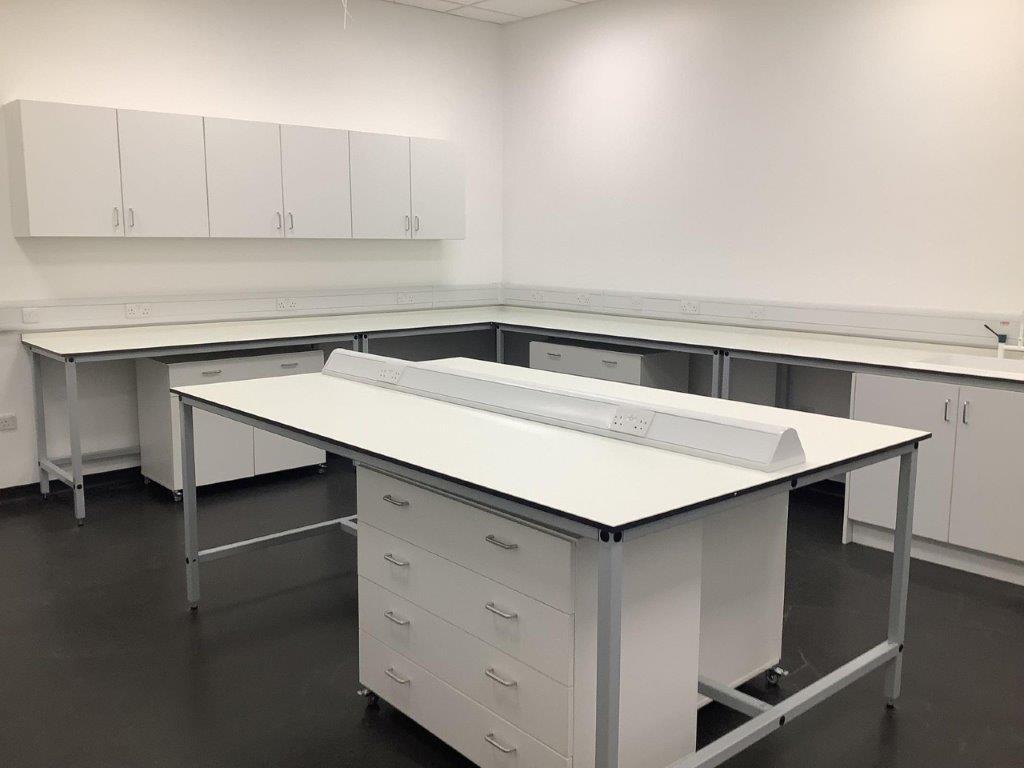
Laboratory storage should be made from materials that resist moisture, cleaning chemicals and daily wear. Cabinet carcasses are often moisture-resistant board with a hard-wearing laminate finish, while areas exposed to water or chemicals may use solid grade laminate or other chemical-resistant materials, with strong hinges, handles and locks.
- Moisture-resistant carcasses for areas near sinks and wash-up
- Smooth, easy-clean surfaces that do not trap dirt
- Lockable doors for equipment and anything that must be secured
- Adjustable shelves so storage can change as needs change
What are the most common laboratory storage mistakes?
The most common laboratory storage mistakes are planning too little storage, keeping chemicals in general cupboards, putting heavy or corrosive items on high shelves, and leaving storage until after the benching is designed. Each of these leads to cluttered worktops, blocked walkways or unsafe storage once the lab is in use.
- Underestimating how much needs storing once the lab is busy
- Storing chemicals in ordinary cupboards instead of suitable cabinets
- Putting heavy, corrosive or frequently used items above shoulder height
- Designing the benching first and adding storage as an afterthought
- Leaving no spare capacity for new equipment
How do you plan laboratory storage?
Plan laboratory storage by listing what needs to be stored, deciding what must be kept separate or secure, and placing each item close to where it is used. Leave some spare capacity, because storage needs almost always grow once a lab is in use.
Step 1: Make an inventory
List equipment, consumables, glassware and chemicals, and how much of each is kept.
Step 2: Separate by risk
Decide what needs specialist cabinets, locks or ventilation, and what can go in general storage.
Step 3: Store close to use
Put everyday items under the benches where they are used, and bulk stock in tall cupboards or the prep room.
Step 4: Leave room to grow
Include adjustable shelving and some spare capacity for new equipment.
We design storage as part of our laboratory furniture service, and our guide to storage cabinets covers general-purpose options.
Frequently asked questions
What is the best storage for a laboratory?
The best laboratory storage combines under-bench cupboards and drawers for everyday equipment, tall cupboards for bulk items, shelving for frequently used items, and specialist cabinets for chemicals and flammable materials. The right mix depends on the work done in the lab, the chemicals held and how many people use the room.
Do chemicals need special storage in a lab?
Yes. Hazardous chemicals should be kept in suitable, labelled cabinets, with incompatible substances kept apart and flammable liquids in cabinets made for them. In the UK this falls under COSHH and DSEAR, both from 2002, and HSE guidance sets limits for flammable liquids kept in workrooms. Schools usually follow CLEAPSS guidance.
How much flammable liquid can be stored in a lab?
HSE guidance sets 50 litres as the usual maximum for the most flammable liquids kept in a workroom or laboratory, stored in a suitable cabinet or bin. Larger quantities should be moved to a dedicated store. Your risk assessment should confirm the right limit for your lab.
Should chemicals be stored in the teaching lab?
Usually only the small amounts needed for lessons. Most schools keep their chemical stock in a secure, ventilated preparation room managed by technicians, which keeps chemicals away from pupils and makes stock easier to control and check. Keeping stock in one store also makes regular chemical audits simpler and reduces the risk of spills during lessons.
What material is best for lab cupboards?
Lab cupboards need moisture-resistant, easy-clean materials with strong hinges and handles. Laminate-faced moisture-resistant board suits most areas, while solid grade laminate or chemical-resistant materials suit wet or chemically demanding areas such as wash-up bays and prep rooms. Strong hinges and handles matter because lab cupboards are opened many times a day.
Do you make bespoke laboratory storage?
Yes. BRAC Projects designs and manufactures bespoke laboratory storage, benching and furniture at our workshop in Polegate, East Sussex, and installs it in schools, universities and research labs across the UK, including our 16-laboratory fit-out for Science Creates in Bristol. Each layout is designed around the room, its services and the work done in it.
Getting laboratory storage right
Well-planned lab storage keeps worktops clear, keeps hazardous items separate and secure, and puts everyday equipment where it is used. Planning storage at the same time as the benching, and checking it against COSHH, DSEAR and HSE guidance, avoids clutter and costly changes later.
See our laboratory and research work and the Science Creates laboratory fit-out.
Planning lab storage? Tell us what you need to store and we will design storage around your benching and workflow. Contact us for a free, no-obligation quote.