

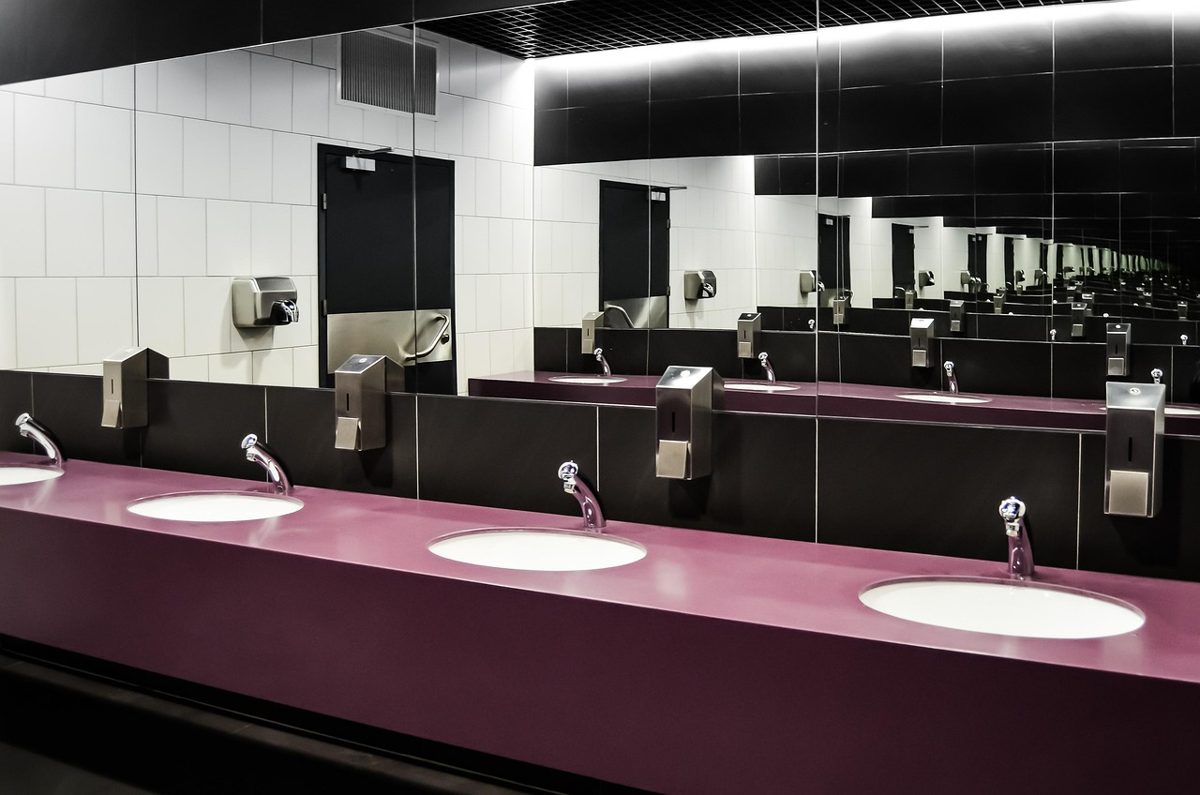
Commercial sanitary ware is the set of WCs, urinals, washbasins, taps and flushing systems built for washrooms that are used all day by many people. Choosing the wrong products leads to blockages, leaks, high water bills and constant repairs. This guide explains what commercial sanitary ware includes, how it differs from domestic products, which materials and standards to look for, and what to specify for high-traffic washrooms in offices, schools, healthcare and public buildings.
Table of Contents
What is commercial sanitary ware?
Commercial sanitary ware is sanitary equipment designed and tested for heavy, repeated use in non-domestic buildings. It covers the fixed appliances people use in a washroom, such as WC pans, urinals and washbasins, plus the cisterns, flush valves and taps that serve them. The term is also written as commercial sanitaryware, and both spellings mean the same thing.
Compared with home bathrooms, these products must cope with far more users per day, tougher cleaning chemicals and a higher risk of misuse. It also has to meet UK water regulations and, in accessible toilets, Approved Document M.
What does commercial sanitary ware include?
A typical commercial washroom package includes the following items. Each one should be chosen to suit the building’s users and footfall.
- WC pans and seats, either wall-hung, back-to-wall or close-coupled.
- Cisterns and flush controls, often concealed behind IPS panels with push-button or sensor flush plates.
- Urinals, as individual bowls, slabs or troughs, with water-saving flush controls or waterless designs.
- Washbasins and wash troughs, either countertop, under-mounted, wall-hung or as one-piece solid surface troughs.
- Taps and mixers, including sensor, push-top (non-concussive) and thermostatic mixing valves.
- Accessible packs for Doc M toilets, with the correct pan, basin, rails and fittings.
- Toilet sanitary ware accessories such as seats, flush plates, wastes and traps.
How is commercial sanitaryware different from domestic toilet sanitary ware?
Commercial sanitaryware is built for many more flushes and hand washes per day than domestic toilet sanitary ware, and it is designed to resist damage and simplify cleaning. The table shows the main differences.
| Feature | Domestic sanitary ware | Commercial sanitary ware |
|---|---|---|
| Daily use | A few people | Dozens to hundreds of people |
| Cisterns | Usually exposed | Usually concealed behind panels |
| Taps | Manual lever or twist | Sensor or timed push-top to save water |
| Fixings | Standard | Heavy-duty and tamper-resistant |
| Maintenance | Occasional | Planned, with access panels and spare parts |
| Materials | Vitreous china, acrylic | Vitreous china, stainless steel, solid surface |
Which materials are best for commercial sanitary ware?
Vitreous china is the best all-round material for commercial washrooms because it is hard, non-porous and easy to clean. Stainless steel and solid surface are better for specific risks and layouts.
| Material | Strengths | Best for |
|---|---|---|
| Vitreous china | Hygienic glazed finish, affordable, wide range of shapes | Offices, schools, hospitality, most public washrooms |
| Stainless steel | Extremely tough, vandal-resistant, easy to sanitise | Prisons, custody suites, transport hubs, high-risk areas |
| Solid surface | Seamless, repairable, can be moulded into one-piece troughs and vanity tops | Wash troughs and vanity units in schools, offices and leisure |
| Solid Grade Laminate (for surrounding panels) | Waterproof, impact-resistant | Cubicles and IPS panels around the sanitary ware |
BRAC Projects manufactures solid surface wash troughs and vanity units in our UK facility. Our guide to low-maintenance commercial vanity units compares the options.
What should you specify for commercial WCs?
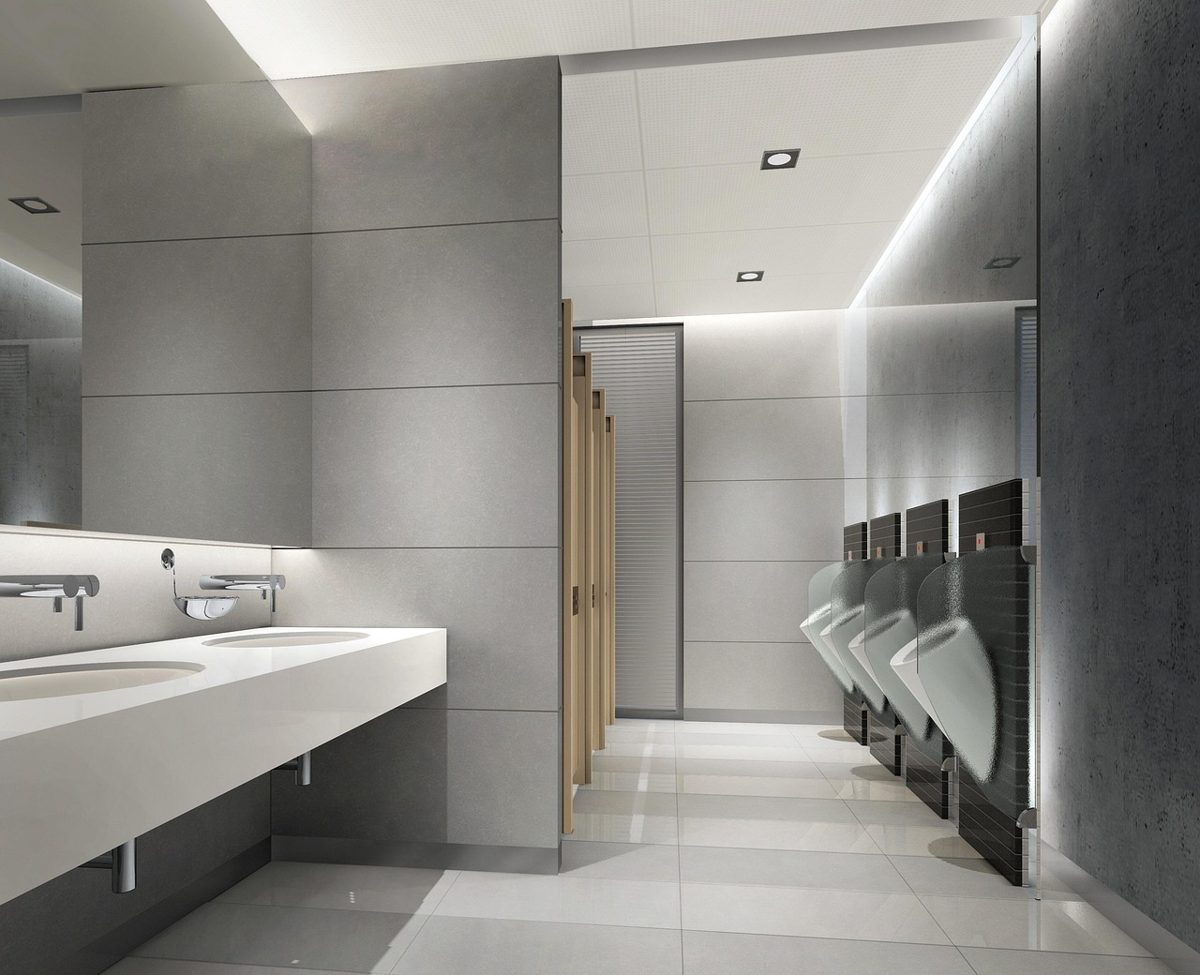
For high-traffic washrooms, specify wall-hung or back-to-wall WC pans with concealed cisterns, made to BS EN 997. Concealed cisterns protect the flushing mechanism from tampering, and wall-hung pans leave the floor clear for cleaning.
- Choose rimless pans where possible, as they are faster to clean.
- Specify a flush of 6 litres or less, as required for WCs under the Water Supply (Water Fittings) Regulations 1999.
- Use heavy-duty seats with quick-release hinges.
- Plan access panels so every cistern can be serviced without removing tiles.
Our comparison of wall-hung, close-coupled and back-to-wall commercial toilet bowls explains each pan type in detail.
What should you specify for commercial urinals?
Specify urinals with a water-saving flush control, because UK water regulations limit how much water urinals can use. Automatic urinal cisterns must not exceed set volumes per bowl per hour, and many buildings now use presence sensors or waterless urinals to cut use further.
- Individual wall-hung bowls, made to BS EN 13407, are easier to clean and replace than slab or trough urinals.
- Privacy screens between bowls improve comfort.
- Sensor or timed flush controls stop urinals flushing when the building is empty.
- Waterless urinals save water but need a strict cartridge-replacement and cleaning routine.
What should you specify for basins and taps?
Specify robust basins or one-piece wash troughs with sensor or timed push-top taps. Washbasins should meet BS EN 14688, and taps should be WRAS-approved for use on UK water supplies.
- Sensor taps are hands-free and turn off automatically, which improves hygiene and saves water.
- Push-top (non-concussive) taps are a lower-cost, durable alternative.
- Thermostatic mixing valves control water temperature to reduce scalding risk, which is important in schools and healthcare.
- Solid surface troughs remove joints between basins, so there are fewer places for dirt to collect.
Which standards apply to commercial sanitary ware in the UK?
Sanitary products for UK commercial buildings should meet product standards, water regulations and, where relevant, accessibility guidance. The main references are:
- BS 6465-1 for the number of sanitary appliances needed in different buildings.
- BS 6465-3 for selecting, installing and maintaining sanitary appliances.
- BS EN 997 for WC pans, BS EN 13407 for wall-hung urinals and BS EN 14688 for washbasins.
- Water Supply (Water Fittings) Regulations 1999, including flush limits for WCs and urinals. WRAS approval shows that a fitting meets these rules.
- Approved Document M for accessible WCs, including a 480 mm seat height and grab rails. See our grab bar by toilet guide.
How do you specify commercial sanitary ware for a high-traffic washroom?
Start with the users and footfall, then work through layout, materials, water use and maintenance. Follow these steps.
Step 1: Calculate how many appliances you need
Use BS 6465-1 and the Workplace Regulations to set the number of WCs, urinals and basins for your building. Our guide to workplace toilet requirements explains the numbers.
Step 2: Match products to the risk of misuse
Vitreous china suits most buildings. Choose stainless steel and anti-ligature products for custodial and secure settings.
Step 3: Conceal services behind access panels
Hide cisterns and pipework behind IPS and duct panelling, with lockable access panels for maintenance.
Step 4: Choose water-saving controls
Specify dual-flush WCs, urinal flush controls and sensor taps to keep water use within the regulations and lower running costs.
Step 5: Plan cleaning and spares
Pick products with standard spare parts and finishes that suit your cleaning chemicals. Wall-hung items and seamless troughs make each clean faster.
Getting commercial sanitary ware right
The right commercial sanitary ware is durable, water-efficient, easy to clean and easy to maintain. Start with footfall and users, then choose concealed cisterns, robust materials and water-saving controls that meet UK standards. BRAC Projects designs, manufactures and installs complete washrooms, including cubicles, IPS panels and solid surface troughs. Read our guides to commercial toilet design and commercial washroom refurbishment, or contact us to discuss your project.
Frequently asked questions
What is commercial sanitary ware?
Commercial sanitary ware is the WCs, urinals, washbasins, cisterns and taps designed for heavy use in non-domestic buildings. It is more durable than domestic products, usually has concealed cisterns and water-saving controls, and must meet UK water regulations.
What is the difference between sanitary ware and sanitaryware?
There is no difference. “Sanitary ware” and “sanitaryware” are two spellings of the same term, and both are widely used in the UK for toilets, urinals, basins and related fittings.
What is the most durable material for commercial sanitary ware?
Stainless steel is the most durable and vandal-resistant material, which is why it is used in prisons and high-risk areas. For most offices, schools and public washrooms, vitreous china offers the best balance of durability, hygiene and cost.
Do commercial washrooms need sensor taps?
Sensor taps are not a legal requirement, but they are recommended for high-traffic washrooms. They are hands-free, which improves hygiene, and they turn off automatically, which saves water. Timed push-top taps are a lower-cost alternative.
How long does commercial sanitary ware last?
Good-quality vitreous china and stainless steel sanitary ware can last for many years in a commercial washroom. Moving parts such as flush valves, seats and tap cartridges wear faster and should be serviced or replaced as part of planned maintenance.
What is WRAS approval for sanitary ware?
WRAS approval shows that a water fitting, such as a tap, cistern or valve, has been tested and meets the Water Supply (Water Fittings) Regulations 1999. Specifying WRAS-approved fittings helps prove compliance on commercial projects.